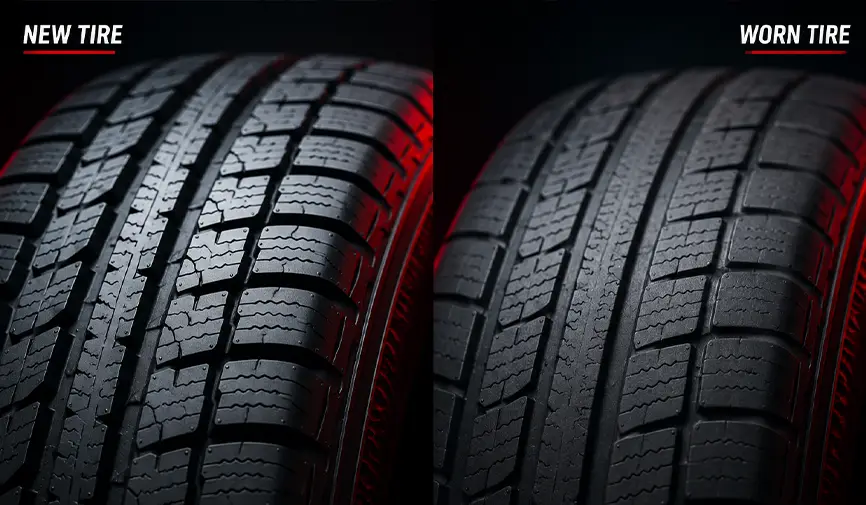
Your tire tread plays a critical role in keeping your vehicle safe on the road. The grooves in your tires are designed to channel water away, maintain traction, and help your car grip the pavement during braking and turning. As tires wear down over time, that tread becomes shallower, reducing their ability to perform safely—especially in wet or high-speed driving conditions.
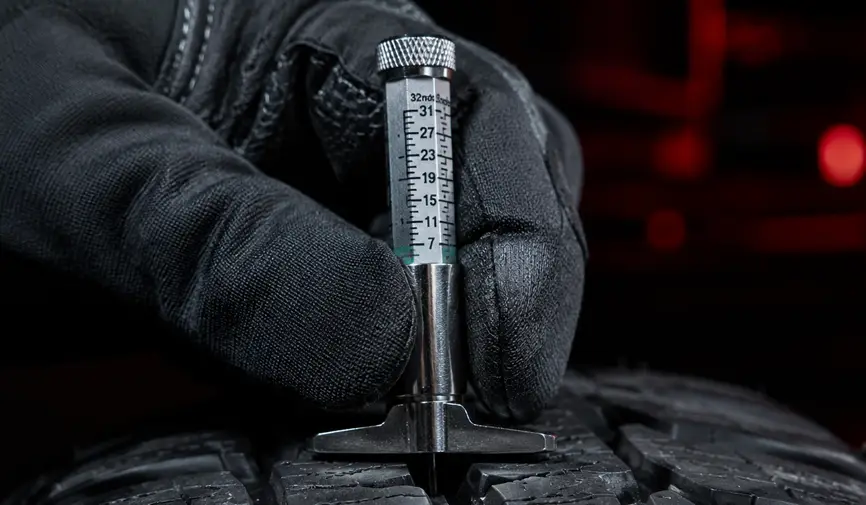
The good news is that checking your tire tread depth is quick and easy, and you can do it right at home with a few simple methods.
Why Tire Tread Depth Matters
Tire tread is essential for maintaining traction between your vehicle and the road. When the tread becomes too shallow, your tires lose their ability to grip effectively. This increases the risk of:
- Longer braking distances
- Reduced control during turns
- Hydroplaning on wet roads
- Tire blowouts at high speeds
Driving on worn or bald tires is particularly dangerous on highways, where higher speeds leave less room for error and require maximum traction for safe stopping and handling.
For this reason, it’s important to check your tire tread regularly.
Step 1: Perform the Penny Test
One of the easiest ways to check tire tread depth at home is the penny test. All you need is a standard U.S. penny.
Here’s how to do it:
- Take a penny and hold it with Abraham Lincoln’s head facing downward.
- Insert the penny into one of the tire’s tread grooves.
- Look at how much of Lincoln’s head is visible.
If part of Lincoln’s head is covered by the tread, your tire still has some usable tread remaining. However, if you can see the entire head, it means your tread depth is too low and the tire should be replaced as soon as possible.
For the most accurate result, check several spots across each tire because wear may not always be perfectly even.
Step 2: Check the Tire’s Tread Wear Indicators
Modern tires include built-in tread wear indicators, sometimes called wear bars. These are small raised sections located between the tread grooves.
To find them, look inside the tire grooves for small horizontal bars that run across the tread pattern. As your tire wears down, the tread will gradually become level with these bars.
When the tread reaches the same height as the wear indicators, the tire has reached the legal minimum tread depth (about 2/32 of an inch) and should be replaced immediately.
Step 3: Look for Uneven Tire Wear
While checking tread depth, it’s also important to examine the tire surface for uneven wear patterns. If one side of the tire is wearing faster than the other, it may indicate issues such as:
- Poor wheel alignment
- Incorrect tire pressure
- Suspension problems
Uneven wear not only shortens tire life but can also reduce vehicle stability.
The Risks of Driving on Bald Tires
Driving with bald or heavily worn tires significantly increases the risk of accidents. Without adequate tread, tires struggle to maintain contact with the road, especially in rainy conditions.
On highways, this danger becomes even greater. At higher speeds, worn tires are more likely to hydroplane, lose traction, or overheat. This can lead to sudden loss of control or even tire failure.
Maintaining healthy tread depth is one of the simplest ways to protect yourself, your passengers, and other drivers on the road.
Get a Free Tire Inspection at MDP Tires
If you’re unsure about the condition of your tires, it’s always best to have them checked by professionals. At MDP Tires, experienced technicians can quickly evaluate your tire tread, wear patterns, and overall tire condition.
Stop by MDP Tires today for a free visual tire inspection. Our team will help you determine whether your tires are still safe or if it’s time for a replacement—so you can drive with confidence and peace of mind.